


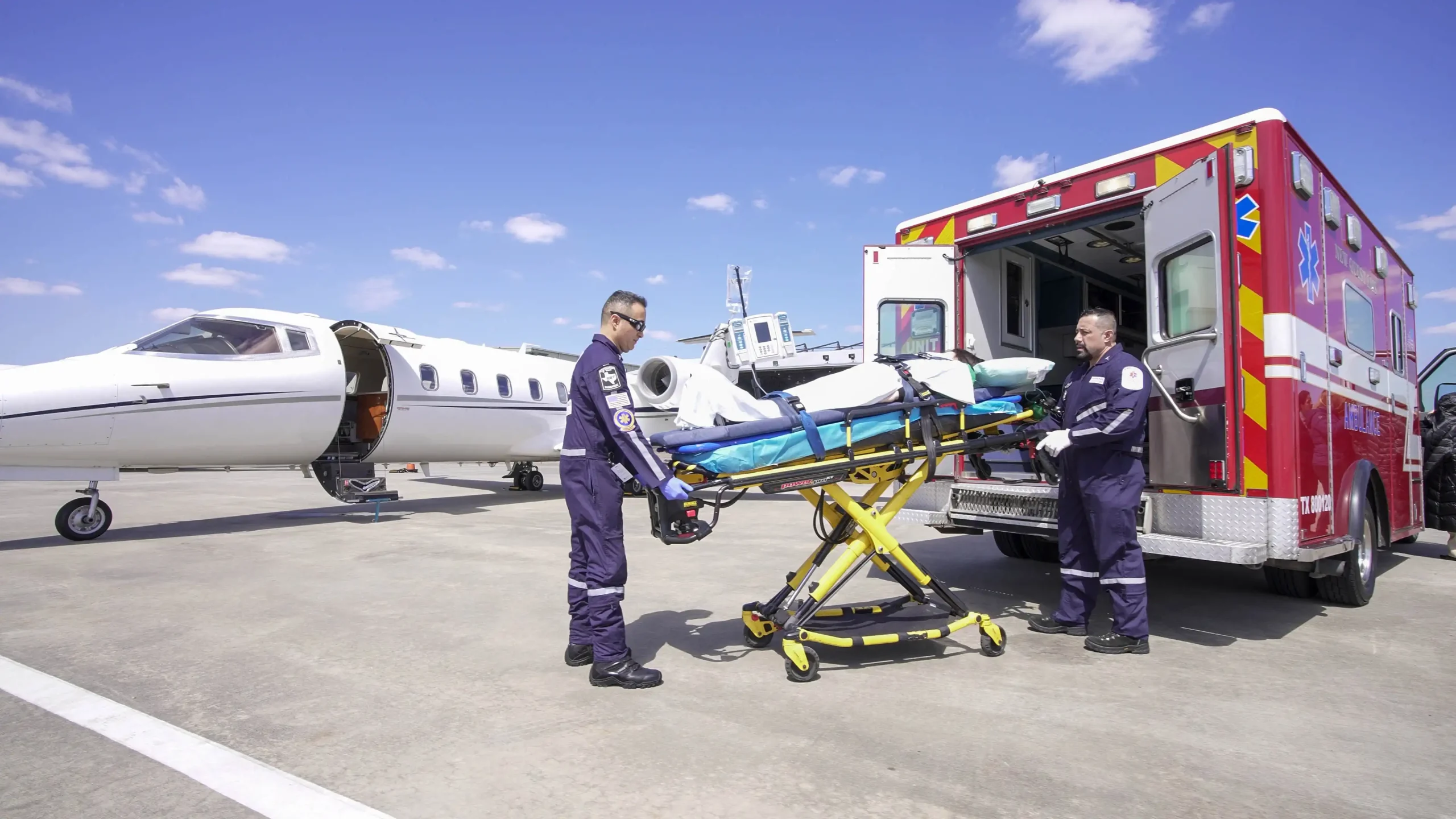
When a patient needs to return to a home country, familiar healthcare system, or preferred facility for continued care, the situation can feel urgent, emotional, and difficult to organize from a distance.
International fixed-wing air ambulance repatriation is not only transportation from one country to another. It usually requires clinical information, sending and receiving facility coordination, documentation, routing, airport planning, customs or country-specific requirements, and a transport plan that protects continuity from origin to destination.
Air Medical Transport provides complete bed-to-bed fixed-wing air ambulance transport management for repatriation cases so families, facilities, and authorized representatives have one dedicated point of contact throughout the process.
Quick Answer
International fixed-wing air ambulance repatriation helps move a medically vulnerable patient across borders when standard travel is not appropriate and the patient may need a medically configured fixed-wing air ambulance, medical support, monitoring, oxygen planning, stretcher positioning, or coordinated bed-to-bed logistics.
The process usually requires patient-condition review, treating-team guidance, receiving-facility acceptance when applicable, documentation, routing, customs or entry requirements, landing permissions, overflight permits when required, airport suitability, aircraft, flight crew, and medical team availability, and clear communication with authorized parties.
What Repatriation Means
Repatriation means arranging transport so a patient can return to a home country, preferred facility, familiar healthcare system, or location closer to family for continued care.
In medical transport, repatriation may involve a hospital discharge abroad, a transfer from one country to another, return to the United States, transport from the United States to another country, or movement between international locations.
The goal is not only to move the patient across a border. The goal is to align the patient’s medical needs, transport environment, documentation, facility timing, and arrival plan into one coordinated process.
Why International Repatriation Can Be Complex
International repatriation can involve multiple parties at the same time: the patient, family, sending facility, receiving facility, treating physicians, ground providers, aviation support, customs or border authorities, and sometimes embassies or consulates.
Depending on the route, planning may involve passports, visas, medical documentation, receiving-facility acceptance, customs requirements, landing permissions, overflight permits, country-specific clearances, routing, weather, fuel stops, and airport suitability.
Those details matter because one missing requirement can affect timing, routing, or whether the transport can proceed as planned.
Clinical and Facility Alignment
Before transport, available clinical information is reviewed with appropriate clinical parties and the selected operator’s medical team when applicable.
Clinical decisions and patient fitness for transport remain with the patient’s treating physicians and appropriate clinical parties. Air Medical Transport uses the information provided to review transport requirements, operational feasibility, and clear next steps.
For international repatriation, the sending and receiving sides often need to align around:
- patient condition and required medical support
- medical documentation and discharge timing
- receiving-facility acceptance, if applicable
- oxygen, monitoring, medication, equipment, positioning, or isolation needs
- ground transportation when included
- family, embassy, consulate, or authorized representative communication when applicable
This alignment helps reduce preventable gaps between discharge, flight planning, arrival, and continued care.
International Documentation and Routing
International fixed-wing air ambulance repatriation depends on both documentation and routing requirements.
Common documentation may include passport copies when international travel is involved, visas when required by the destination country, recent medical records or physician documentation, receiving-facility acceptance when applicable, and country-specific entry or health documentation when required.
Routing, airport suitability, fuel stops, customs processing, landing permissions, overflight permits, documentation, and country-specific requirements may affect the timeline. Some international or intercontinental transports require more planning because multiple jurisdictions must align before the flight can proceed.
Families do not need to manage those transport details alone. A dedicated Flight Coordinator Specialist helps explain what documentation is needed, what is still pending, and what happens next.
What Families Can Expect
Families can expect the process to begin with a review of the patient’s condition, location, destination, timing needs, and available documentation.
The early review usually helps clarify:
- whether fixed-wing air ambulance repatriation should be evaluated
- what clinical and facility details are still needed
- whether receiving-facility acceptance is required
- what documentation may affect timing
- whether the route may involve customs, permits, fuel stops, or country-specific clearances
- what quote and booking steps would be needed to proceed
The process can feel complex, but the goal is simple: create a clear path for the patient to move from the current location to the receiving destination with the right transport environment and appropriate communication.
What Air Medical Transport Reviews
Air Medical Transport provides complete bed-to-bed fixed-wing air ambulance transport management for repatriation cases within the United States, from and to the United States, and worldwide between international locations.
Our Flight Coordinator Specialists manage each transport through selected FAA Part 135 and/or EASA-certified fixed-wing air ambulance operators, coordinating transport planning, medical logistics, communication, and regulatory requirements.
Useful starting information usually includes:
- patient condition and current location
- destination country, city, or receiving facility
- sending and receiving facility contacts, if applicable
- physician or care-team guidance
- oxygen, monitoring, equipment, positioning, or isolation needs
- passport, visa, or travel-document status when applicable
- requested timing and any known discharge or receiving-facility requirements
You do not need every detail to begin. Starting with the information available can help identify what else is needed for a quote and repatriation review. For a practical overview, see What Information Is Needed for a Fixed-Wing Air Ambulance Quote and Case Review?.
What Affects Timing
Repatriation timing is transport-specific.
Shorter domestic or regional repatriations may be reviewed more quickly when patient readiness, facility timing, aircraft, flight crew, and medical team availability, documentation, routing, and airport suitability align.
Long-range, international, or intercontinental repatriations often require more planning because customs, landing permissions, overflight permits, fuel stops, country-specific clearances, documentation, and time-zone coordination may affect scheduling.
No single timeframe applies to every repatriation. The most careful planning approach is to begin review early, share available clinical and logistical details, and let the required elements be identified before booking expectations are set.
Embassy, Consulate, and Family Communication
In complex international situations, families may choose to contact an embassy or consulate for consular guidance, documentation support, or local-process clarification.
Air Medical Transport does not provide legal advice and does not direct a hospital’s clinical decisions. When appropriate authorizations and documentation are available, our team can coordinate transport-related communication with authorized family representatives, facilities, embassies, or consulates when that support is part of the repatriation process.
Clear authorization matters because hospitals, facilities, and government offices may have privacy, documentation, and procedural requirements before information can be shared.
What This Means for Families and Care Teams
If you are trying to bring a patient home or move a patient internationally for continued care, it is understandable to feel uncertain about where to begin.
The best first step is not to solve every detail alone. It is to start with the patient’s condition, current location, destination, and timing concerns so the transport requirements can be reviewed in a structured way.
International fixed-wing air ambulance repatriation works best when clinical information, facility timing, documentation, routing, and receiving-side plans are aligned before the transport moves forward.
What Happens Next
If the patient may need international or long-distance repatriation by fixed-wing air ambulance, begin with a repatriation review.
You do not need full details to begin. Start with your contact details, the patient’s condition, location, and destination, and we will help identify the information needed for a quote.
In many cases, accurate patient information, sending and receiving facility contact information, passport copies for international transports when applicable, and the most recent medical report are enough to begin the repatriation review process. If the latest medical report is available, please send it with the request. Otherwise, with appropriate patient authorization and facility cooperation, our Flight Coordinator Specialists can often obtain additional records and information directly from the treating facility as needed.
For a broader service overview, review Fixed-Wing Air Ambulance Repatriation. For the full quote, booking, payment, verification, scheduling, and transport-monitoring sequence, review the complete bed-to-bed fixed-wing air ambulance transport process.
Medical Disclaimer
This content is for informational purposes only and does not replace medical advice, legal advice, immigration advice, or consular guidance. Fitness for air travel should be determined by the patient’s treating medical team.
Reviewer
Reviewed for operational accuracy by:
Xavier Paz
Director / CEO, Air Medical Transport
Review scope:
Fixed-wing air ambulance transport management, medical logistics coordination, aviation coordination, and operational accuracy.
Review date:
August 23, 2026


0 Comments